

Social media scheduling means planning and queuing posts in advance so they publish. Scheduling tools provide a content calendar and can automatically post on your behalf at optimal times, freeing up hours each week. This is critical today: roughly 5 billion people (about 63% of the world’s population) use social media, so maintaining an active presence can significantly boost a small business’s visibility and credibility. For small businesses with limited time, scheduling is often the most effective solution: it allows owners to plan ahead and create quality content that impacts the bottom line. In practice, social media scheduling keeps your channels active and consistent even when you’re busy running your business.
Why Social Media Matters for Small Businesses
A strong social media presence is almost a requirement for small businesses today. Consumers often expect businesses to be on social platforms for legitimacy. Social channels like Facebook, Instagram, LinkedIn, and X let small brands raise awareness, engage customers, and drive sales directly. Many users discover new products on social media, and well-timed posts can funnel leads right to your website or store. In fact, small businesses can gain an edge over larger companies by sharing authentic stories and promptly engaging with their community. Social media also offers a cost-effective way to connect: unlike expensive ads, even a simple post or timely reply can nurture customer relationships and build loyalty without a huge budget.
 Key Benefits of Social Media Scheduling Tools
Scheduling tools act like a trusty assistant, automating routine tasks so you can focus on strategy. They often include visual calendars and content libraries to organize posts for weeks or months ahead. The main benefits include:
Save Time. Plan and craft posts in batches instead of logging in daily. By automating publishing, tools save hours of manual work.
Maintain Consistency. Regular posting keeps your audience engaged. Even during busy periods, scheduled posts ensure your brand stays active online.
Optimize Reach. Post at the times when your audience is most active. Scheduling tools let you set ideal post times or even optimize timing for global followers.
Performance Insights. Many tools provide basic analytics on clicks, likes, and reach. This data helps you see what content resonates and refine future posts.
Quality Control. With a calendar view of all posts, you can ensure brand consistency across channels. It also reduces errors by letting you review and proof content before it goes live.
Scheduling tools essentially “set it and forget it,” helping small businesses punch above their weight online. By automating routine tasks, you free up time to engage more creatively with your audience and focus on growth.
Popular Scheduling Tools for Small Business
Small businesses have many scheduler options. Some well-known choices include Buffer and Later, each with user-friendly interfaces and free tiers. For example, Buffer lets one user manage up to 3 social accounts and queue 10 posts per account on its free plan. Later is known for its visual planner (ideal for Instagram): its free plan allows 30 posts per profile per month. Larger platforms like Hootsuite offer one dashboard for nearly every social network, though they typically start at higher price points.
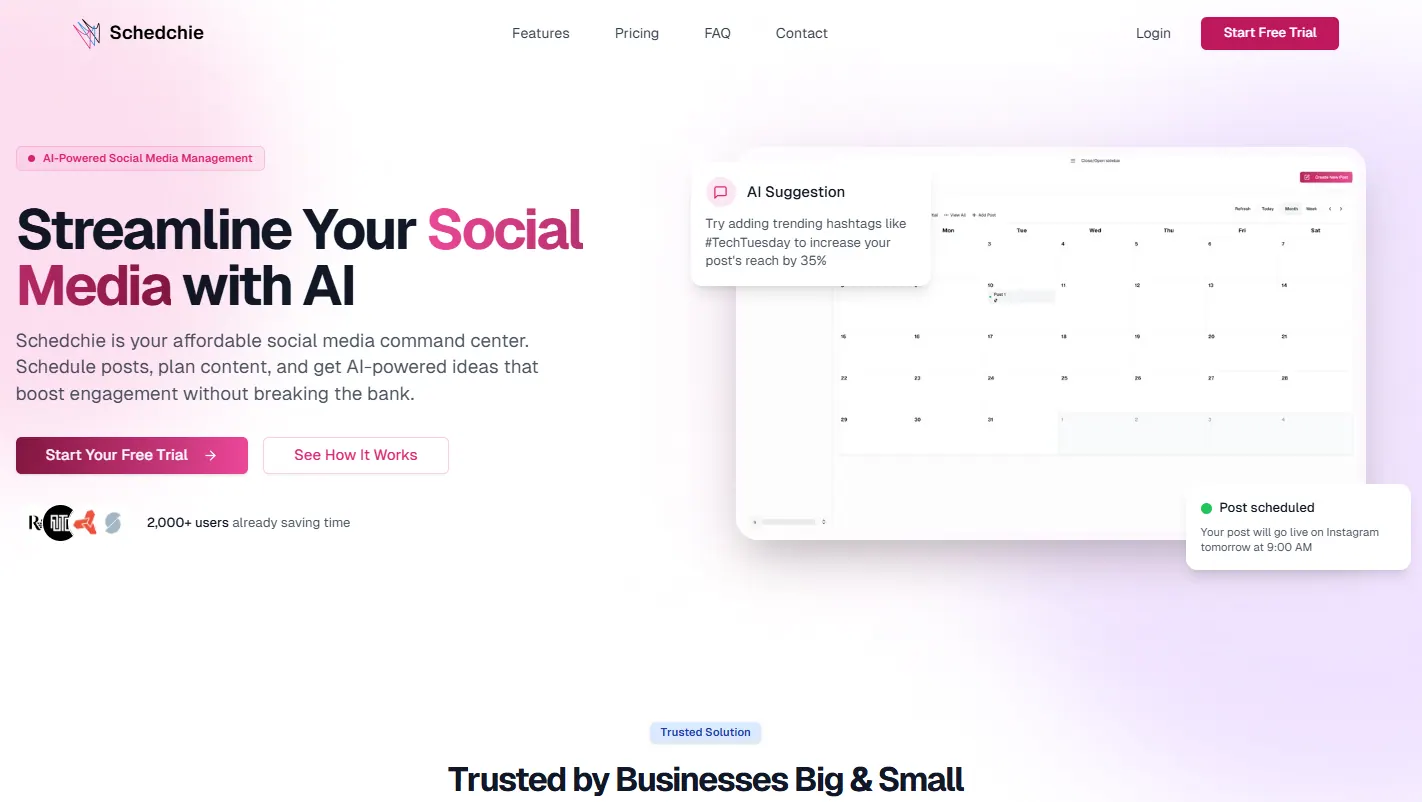
Newer tools like Schedchie are built with small budgets in mind. Schedchie costs under $10 per month for unlimited scheduling across all your accounts – a feature that usually costs much more elsewhere. It includes a unified content calendar, engagement analytics pulled from the platforms’ own APIs, and an MCP server so ChatGPT or Claude can draft and schedule posts straight into your account. In short, Schedchie provides the essentials at a fraction of the cost of many rivals. Other options include Zoho Social, Buffer and Planable, though each of those meters accounts, brands or posts in a way a flat price does not.
 How to Use a Social Media Scheduling Tool
Adopting a scheduler is easy and can fit into any workflow. A basic workflow looks like:
Plan Your Content Calendar. Decide on content themes and goals for the week or month. Many tools offer a calendar view, letting you visualize when each post will go live.
Create or Gather Content. Write your posts, design images, and assemble hashtags. You can do this all at once – for example, draft a month’s Instagram posts in one sitting.
Schedule Posts. Upload your content into the tool, assign each post a date and time, and select platforms. Good schedulers even recommend the best posting time. Once scheduled, posts will publish automatically, so you don’t have to be online.
Review Your Schedule. Before letting the tool work its magic, scan your calendar view for variety and consistency. Ensure a healthy mix of content (photos, videos, links) and check for any brand or spelling issues while there’s still time to edit.
Monitor and Learn. After posts go live, use the scheduler’s analytics dashboard to track engagement. Identify which content types or times work best, and then adjust your future calendar accordingly.
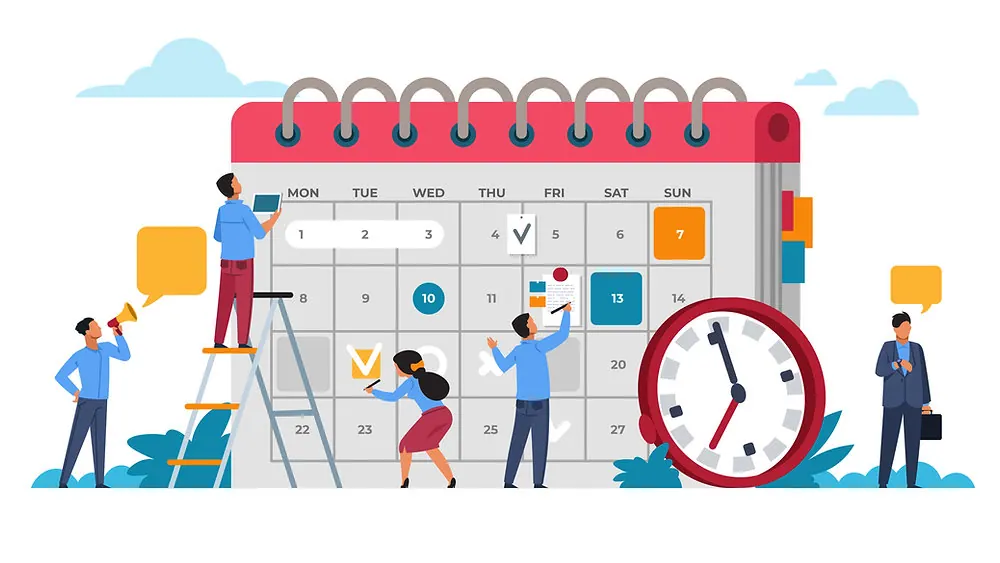 This workflow turns a tedious daily task into a manageable weekly or monthly project. Instead of scrambling to post on the fly, you’re executing a strategy: planning ahead, scheduling in bulk, and then using data to improve.
Embracing Scheduling for Growth
Using a scheduling tool can be a game-changer for small businesses. By automating posting, you build momentum: more frequent, better-timed content leads to higher engagement, faster audience growth, and ultimately more customers. In the end, it’s not just about convenience – scheduling empowers small teams to stay proactive and data-driven on social media.
If you’re new to this, start simple. Pick a handful of posts to schedule this week. Experiment with times and messages, and watch your metrics. Tools like Schedchie even offer a free trial so you can test unlimited scheduling before comminting. Every minute you save and every extra post you publish can add up to real growth. With a small upfront effort to set up a schedule, your small business can reap big rewards — turning social media from a time-sink into a steady driver of engagement and sales.